I was watching a discussion on a popular garden forum between two well known seasoned gardeners. They were discussing the difference between “soil” and “compost”. One gentleman said that “soil” was anything consisting of decomposed matter. The other gentleman argued that “soil” was rocks and minerals.
Well, for arguments sake, I’ll have to disagree with both of them.
The second gentleman was only partially right.
What is the difference?
Soil is basically the top 6 inch or so layer of the earth. It’s made up of sand, silt, rock, minerals, gases and even decomposed matter like plant material and dead carcasses from animals and insects (compost). It also includes microbes and fungi know as the food web. All of this matter is considered “topsoil” and sits on the TOP of the earth (hence the name)
Unfortunately, the earth is being rapidly depleted of this resource as commercial farmers scrape the top layer off to remove weeds and level the land. This results in a dead, dry and parched earth. This is where farmers like to plant. But the sad reality is, they are depriving themselves of the best growing medium on the planet. They are then forced to till in fertilizers to replenish what was lost. And then this vicious cycle starts over again year after year.
Compost is basically decomposed plant matter like kitchen waste and rotting plants. It also includes dead shrubs, tree branches, and basically anything living thing that falls to the earth and dies. It is broken down slowly over time and turned back into what many would call dirt. It turns into one of the richest organic fertilizers that money can buy.
So when you hear someone say “I added soil from my compost pile to my raised beds”, what they are really saying is, I added compost to my raised bed from my compost pile 🙂
So to simplify things, You can amend your topsoil with compost to increase its mineral content or to make the soil more loamy for planting, but you never amend your compost with soil. Topsoil will contain compost, but compost does not contain topsoil.
In this video, I answer the following viewer questions:
1. How is the lasagna bed doing?
2. When is the best time to till in compost?
3. What kind of soil do you put in your raised beds?
4. Are you growing indoors this winter?
5. Where do you get most of your seeds?
6. You need to let your potatoes sit. You really are an amateur
7. You drank weed killer, gasoline and turpentine?
8. Your shirts are really distracting
This recipe has been in my family for decades. I remember my Mom making 2 or 3 at a time as it was so delicious, we as kids would gobble it up.
The beauty of this pie is its simplicity. No need to make a crust. You place all the ingredients in a blender and pour it into a pie pan. As the flour settles to the bottom, it makes its own crust.
Impossible Coconut Pie
4 eggs
1/4 lb. butter
1/2 cup flour
2 cups milk
1/2 cup sugar
1 cup coconut
2 tsp. vanilla
Place all ingredients into a blender. Blend until well combined about 15-20 seconds.
Pour into a greased 9″ pie dish. Bake at 350 deg. for 1 hr. or until set.
In this week’s Q&A I answer the following questions:
1. Why are you wasting your time on bolting lettuce? Yank the crap out and throw it away
2. Why did you have the seat belt on?
3. Why don’t you sell seeds?
4. You ramble way too much
5. If you lay wood chips, you’ll deplete the soil of nitrogen
Weekend Q&A. In this edition, I will answer the following questions
1. What is the advantage of starting seeds in cells instead of trays. Do you really have to spend the extra money?
2. I have heard that cardboard is bad for the compost. is this true?
3. Every time I grow lettuce, it’s bitter when I pick it. how can I prevent this?
4. In a facebook post, some people were recommending foliar feeding. What are your thoughts on it?
5. I heard you say that you don’t use animal manures on your property at all. Can you explain why?
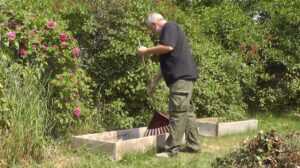
If you hate digging and turning your compost, then lasagna gardening just might be the ticket for you. I’ve done it a little on a small bed, but this is the first year I’ve tried it on a larger bed (3’x10′).
The system works by layering (hence the term lasagna) your browns and green, alternating each layer until you have a stack that’s way above the top of the bed.
Before using the Greenstalk Vertical Grow System, I always believed the best way to garden was either directly in the ground or in raised beds. I never considered using any kind of vertical system. My reasons were varied. However, my greatest concern was crowding. I assumed that cramming too much into one space would certainly cause disease problems. Without proper circulation, I was just asking for trouble.
I was wrong
Since using a vertical grow system, I must say I ‘m convinced this is a great addition to my traditional gardening methods. I’m not advocating abandoning your raised beds or traditional in-the-ground garden. But I do suggest you give vertical gardening a try.
Greenstalk Vertical grow system
Benefits of growing vertically
Air Circulation
One reason I resisted vertical gardening in a tower was air circulation. I thought putting too many plants together in one area would not allow proper air to flow around them. As it turns out, circulation is actually improved as each section is far enough away from the others so it’s not a problem. And the fact it is elevated actually helps with air flow underneath the unit.
A runner is a shoot or stem coming from the root of some plants. These “shoots” are produced by all June-bearing strawberry plants and most ever-bearing and day-neutral strawberry varieties.
Strawberry plants produce runners to propagate themselves. This is basically how the plant reproduces. It lays down the runner looking for soil. Once it finds it, the shoot attaches itself to the soil and starts to root. This is where a new plant will develop.
Why prune them?
As the plant lays down its runners, it expends a lot of energy into producing its offspring. There are two schools of thought here. Some people won’t even let the plant lay down its runners as too much energy is taken away from the plant and less energy goes into strawberry production. Others think that the runners should be allowed to take root, but be cut away from the parent plant immediately after the new plant has established itself.
I am a fan of both methods. Strawberry plants only produce fruit for a few good years and then production drops off dramatically. I usually cut shoots I see coming off the plants for the first couple of years. After that, I usually let the plant propagate itself because I know they are aging and they will be producing less over the years. Then I will cut the runner away from the parent plant.
Never leave the plants attached to each other as it serves no purpose and you may be setting yourself up for failure if one of the plants dies, it could take the other one down with it.
It’s raining today and the forecast is for a lot more of it the next few days. I decided to pull a few books off the shelf to flip through and gain inspiration. I’ve mentioned before that I have 4 huge bookshelves full of gardening, survival and homesteading books, so the task was daunting. What do I read?
After staring for 15 minutes wondering what to pick, I decided to pull three of my favorites, ones that I thought I could share with my readers.
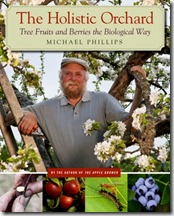
#1 The Holistic Orchard by Michael Phillips
Great instructional book for the small grower. In The Holistic Orchard, Michael Phillips shows you how to adapt to nature rather than try to change it.
His healthy, holistic approach to maintaining an orchard is a refreshing change from the standard teachings of modern orchardists.
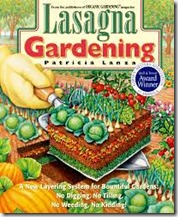
#2 Lasagna Gardening by Patricia Lanza
Lasagna gardening is a no till, little work way to generated compost by layering. No turning or taking your soils’ temperature. Just stack your browns and greens alternating between each. Let it sit for a few months and then plant. Gardening can’t get any simpler that this.
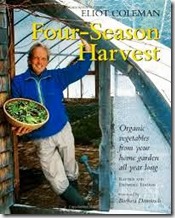
#3 Four Season Harvest by Eliot Coleman
Four Season Harvest is all about growing year round. This book has been the standard for so many people wanting to grow food for their families all year long.


 ks by layering (hence the term lasagna) your browns and green, alternating each layer until you have a stack that’s way above the top of the bed.